Enterprise Excellence vs. Community Innovation: Inside the Strategic Battle for Mixed Reality Dominance
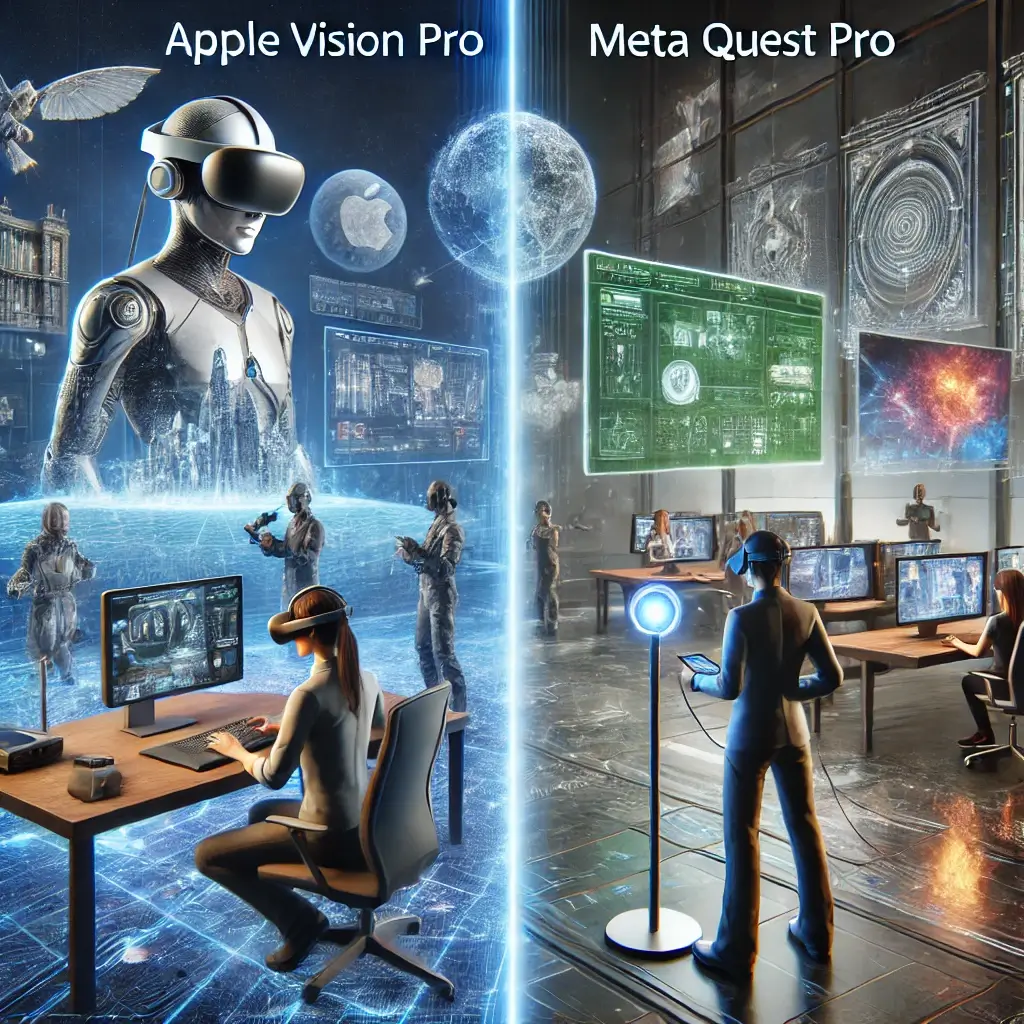
The Battle for Mixed Reality Dominance
In 2024, the VR/MR landscape is witnessing a head-to-head battle between Apple’s Vision Pro and Meta’s Quest Pro, each vying to define the future of immersive technology. These devices represent more than just technological advancements; they embody differing visions of how mixed reality integrates into our lives. Apple, a newcomer to this niche, offers a premium, tightly integrated device that promises to revolutionize professional workflows. Meta, with years of experience, continues its mission to make VR/MR accessible to a wider audience. With the extended reality market projected to grow by 165% this year (Morgan Stanley Extended Reality Report, 2024), this showdown could shape the trajectory of the entire industry. This article explores the distinctive strategies, technological innovations, and market implications driving the competition.
Apple Vision Pro: Setting New Standards in Professional Mixed Reality
Apple’s Vision Pro stakes its claim at the high end of the market, setting new standards for mixed reality hardware:
Redefining Visual Excellence in Mixed Reality
Exceptional Display Quality: Its dual-micro OLED system provides 23 million pixels of unparalleled clarity and HDR support, redefining professional applications such as medical imaging and 3D modeling (Display Technology Assessment, 2024).
Seamless Reality Interaction Through Cutting-Edge Sensors
Advanced Sensors: LiDAR, eye-tracking, and hand-tracking systems ensure seamless user interaction, blurring the line between physical and virtual realities (Spatial Computing Evolution Study, 2024).
Transforming Professional Workflows Through Ecosystem Integration
Enterprise Ecosystem Integration: By integrating seamlessly with macOS and iOS, Vision Pro enhances workflows in industries like architecture and healthcare, offering tools such as virtual desktops and immersive visualization (Professional VR Application Guide, 2024).
Exclusive Technology for Premium Markets
Premium Pricing Strategy: At $3,499, Vision Pro is marketed as an exclusive tool for professionals and luxury users, reinforcing Apple’s premium brand image (Premium Technology Assessment, 2024).
Meta Quest Pro: Democratizing Mixed Reality Technology
Meta’s Quest Pro remains rooted in its commitment to democratizing VR/MR technology:
Cost-Effective Visual Performance for Immersive Experiences
Balanced Display Performance: With a resolution of 2160 x 2160 per eye and LCD panels featuring local dimming, the Quest Pro provides an efficient yet immersive visual experience (Virtual Reality Development Guide, 2024).
Enhancing Human Connection in Virtual Spaces
Collaborative Capabilities: Features like hand-tracking, face-tracking, and mixed-reality passthrough make it a powerful tool for social and educational platforms (Digital Experience Market Study, 2024).
Versatility Across Entertainment and Business Applications
Wide-Ranging Applications: The Quest Pro excels in gaming, fitness, and virtual meetings, appealing to both individual users and enterprise clients.
Balancing Performance and Accessibility
Affordable Price Point: At $999, the Quest Pro delivers high-value functionality without breaking the bank, making it a popular choice among diverse demographics (Extended Reality Investment Review, 2024).
The Evolving Landscape of Extended Reality
The competition between Apple and Meta highlights broader trends and innovations shaping the VR/MR landscape:
Professional Market Adoption Driving Growth
Focus on Enterprise Adoption: Apple’s emphasis on professional tools positions the Vision Pro to dominate high-value sectors like healthcare, engineering, and digital content creation (Morgan Stanley Extended Reality Report, 2024).
Expanding Mainstream Appeal Through Accessibility
Growth in Consumer Markets: Meta’s Quest Pro has seen a 35% sales increase in Q3 2024, bolstered by its affordability and expansive content ecosystem (VR Market Analysis Review, 2024).
Hardware Innovation Powering Next-Generation Experiences
Technological Advancements: Both Apple and Meta are leveraging breakthroughs in AI and chip design. Apple’s custom R1 chip and Meta’s Snapdragon XR2+ platform showcase the power of optimized hardware-software integration (Computer Vision Technology Report, 2024).
Contrasting Visions for the Future of Mixed Reality
While Apple focuses on exclusivity and professional-grade innovation, Meta emphasizes inclusivity and diverse use cases. Apple’s partnerships with software developers highlight its dedication to enterprise solutions, while Meta’s collaborations with educators and gamers expand its user base. These strategic differences not only cater to varying market segments but also drive the evolution of VR/MR technology by fostering competition and innovation.
Two Paths Forward for Extended Reality
The Apple Vision Pro and Meta Quest Pro exemplify two contrasting approaches to the future of VR/MR. Apple targets professionals and high-end users with its premium features and ecosystem integration, while Meta reaches a broader audience through affordability and community-driven applications. This competition is a boon for the industry, pushing technological boundaries and creating a more vibrant market. As these devices continue to evolve, they will undoubtedly reshape how we interact with virtual and mixed reality, catering to both niche professionals and mainstream consumers.
Industry Sources and Further Reading
References
Morgan Stanley Extended Reality Report, 2024
Display Technology Assessment, 2024
VR Market Analysis Review, 2024
Spatial Computing Evolution Study, 2024
Professional VR Application Guide, 2024
Extended Reality Investment Review, 2024
Computer Vision Technology Report, 2024
Digital Experience Market Study, 2024
Premium Technology Assessment, 2024
Virtual Reality Development Guide, 2024